

🎉 Spring Season Tech Care Offer 31d : 0h : 0m : 0s | Get 20% Off ➡️
Call Louder Logo

computer

windows file recovery

Does BitLocker Block Windows File Recovery?

Many people use BitLocker to protect their files because it adds strong security to a drive. However, when data gets deleted or lost, a common question comes up: does BitLocker block Windows File Recovery? The short answer is: it depends. Although BitLocker protects your data from unauthorized access, it can also make recovery much more complicated. Read on to know more! What Is BitLocker and How Does It Work? BitLocker is a built-in Windows feature that encrypts your drive. This means your data is locked and cannot be accessed without the correct password and/or recovery key. So because of this, even if someone removes your drive and connects it to another computer, they cannot read your files. This is great for security. However, since the data is encrypted, recovering deleted files becomes more complex. Can Windows File Recovery Work on a BitLocker Drive? Yes, Windows File Recovery can work on a BitLocker-protected drive but only if the drive is unlocked first. If the drive is still encrypted and locked, the recovery tool cannot scan it properly. Because BitLocker encrypts everything on the drive, the recovery software sees unreadable data unless you provide the correct password or recovery key. Therefore, you must unlock the drive before attempting recovery. So, Windows file recovery BitLocker situations is possible, but there are conditions that must be met first. When BitLocker Makes Recovery Difficult Although BitLocker does not completely block recovery, it adds extra steps and makes it even more difficult. Here’s why: 1. You Need the Recovery Key If you forgot your BitLocker password and do not have the recovery key, it becomes almost impossible to access the data. Since the drive is encrypted, even professional tools cannot simply bypass it. 2. Encryption Changes How Data Is Stored Because the files are encrypted, recovering raw data without unlocking the drive will only show scrambled content. Thus, you cannot recover files from an encrypted drive unless it is properly decrypted or unlocked. 3. Windows Recovery Tool Limitations There are certain Windows recovery tool limitations when dealing with encrypted drives. The built-in Windows File Recovery tool is basic and works mainly through command lines. Although it can recover deleted files, it does not fix serious corruption or hardware damage. If the drive has additional problems, such as file system errors or physical damage, recovery becomes more complicated. Can You Recover Files from an Encrypted Drive? You can restore files from an encrypted drive system if:  Since encryption protects the entire drive, it does not delete your data. It only locks it. Therefore, if you unlock the drive successfully, recovery tools can scan it like a normal drive. Also note that if you have lost your BitLocker Recovery Key, it will be very difficult to recover data from the drive. What If Windows File Recovery Does Not Work? Sometimes, even after unlocking the drive, Windows File Recovery may not find your files. This can happen because: In such cases, you may need a professional BitLocker encrypted drive recovery solution. When to Consider a BitLocker Data Recovery Service If your data is very important and the built-in tool fails, you may consider a BitLocker data recovery service. These services use advanced software and hardware tools to handle encrypted drives carefully. Consider a BitLocker data recovery service if your data is highly valuable but cannot be recovered using BitLocker’s built-in recovery tools. These high-end and high-tech software and hardware tools can assist you in recovering your encrypted drive in an appropriate way. FAQs

Does BitLocker Block Windows File Recovery? Read More »

bluescreen pc

Blue Screen Errors on Windows PCs: What Triggers Them and How to Resolve

If you’ve ever turned on your computer and suddenly seen a bright blue screen with an error message, you’re certainly not alone. It’s one of the most frustrating things that can happen. One minute everything is working fine, and the very next moment your system crashes and restarts. Many people call it the bluescreen pc problem, and it can feel scary at first. But here’s the good news: although it looks serious, it’s often fixable. Read on to know more about what causes it and what you can do if your pc keeps blue screening. What Is the Blue Screen of Death? The Blue Screen of Death, also called BSOD, appears when Windows runs into a serious problem it cannot fix on its own. As part of its basic computer support routines, the system is designed to stop critical failures from causing further damage. Because Windows doesn’t know how to safely continue, it shuts everything down and restarts your computer. It does this to protect your files and hardware. On Windows 10 and Windows 11, you’ll usually see a message that says: “Your PC ran into a problem and needs to restart.” You might also notice a strange code on the screen. That code helps identify what went wrong. When you see a blue screen on computer monitor, it doesn’t always mean your computer is ruined. It simply means something went wrong and Windows had to stop. What Is a STOP Code? A STOP code is a short error code made up of numbers and letters. It shows up on the blue screen and gives a clue about what caused the crash. For example, you might see codes related to memory, drivers, or hardware. Although these codes look technical, they are helpful because they point toward the real issue. So if your pc keeps blue screening, paying attention to that code can make troubleshooting easier. Why Does a PC Keep Blue Screening? There are several common reasons this happens. Such as: 1. Hardware Problems Sometimes the issue is physical. The computer has parts like RAM (memory), a hard drive, a graphics card, and a processor. Crashes can happen in case one of these parts is broken or malfunctioning. For example, faulty RAM can cause random restarts because the system cannot properly store or access information. A damaged hard drive can also trigger errors since Windows depends on it to load files. Overheating is another common reason. If your computer gets too hot, it may shut down suddenly to protect itself. 2. Outdated or Broken Drivers Drivers help your hardware communicate with Windows. However, when the drivers are outdated, missing or corrupt, issues can occur. For example, in case you just updated Windows but didn’t update your graphics driver, the system might crash because of a conflict. This is a very common reason behind the bluescreen pc issue. 3. Corrupted System Files Windows needs important system files to run properly. If those files become damaged, the system may not work correctly. This can happen because of sudden power loss, forced shutdowns, malware, or failed updates. Since Windows depends on these files, corruption can lead to crashes. 4. Software Conflicts Sometimes new software doesn’t get along with your system. Although this is not always common, installing certain programs can cause conflicts. For example, antivirus programs, system tools, or performance boosters can sometimes interfere with Windows processes. 5. Viruses or Malware Malware can damage system files, overload processes, or create hidden problems. Because of this, your computer may crash repeatedly. If your pc keeps blue screening and you haven’t checked for viruses, it’s a good idea to run a full scan. Blue Screen on Computer: How to Fix It Now let’s look at blue screen on computer how to fix in easy steps. Step 1: Disconnect External Devices Sometimes the problem isn’t inside your computer at all. Unplug USB drives, printers, webcams, and external hard drives. Leave only your keyboard and mouse connected. Then restart your PC. If it starts normally, one of those devices may be the problem. Plug them back in one at a time to find out which one is causing the issue. Step 2: Restart and Perform a Hard Reset If your computer won’t start properly, try this simple method: This clears leftover electricity and can fix small startup problems. Step 3: Update Drivers Since drivers often cause blue screen errors, updating them can solve the problem. You can update drivers through Device Manager in Windows. Focus especially on: Updated drivers can fix conflicts and improve stability. Step 4: Run Windows Startup Repair If Windows won’t boot: This tool checks for startup issues and tries to fix them automatically. Step 5: Check for Windows Updates Sometimes bugs in the system can cause crashes. Microsoft often releases updates to fix these problems. Go to Settings → Windows Update → Check for updates. Installing updates can improve stability and reduce errors. Step 6: Scan for Viruses Run a full system scan using Windows Security or another trusted antivirus program. If malware is found, remove it and restart your computer. Step 7: Check Hardware Health If the problem continues, hardware may be failing. You can run built-in diagnostics (if your PC has them) or use memory testing tools. If RAM or the hard drive is damaged, replacing the faulty part may solve the issue. Final Thoughts It can be stressful to see a blue screen on computer monitor, particularly when it occurs frequently. However, it may seem impossible to fix, but it’s usually Windows trying to protect your system. The majority of blue screen errors occur due to drivers, hardware issues or corrupt files. Because these problems can be readily fixed with updates, repairs or even trying simple troubleshooting steps, there’s generally no reason to panic over them when they occur. You just need to stay calm, follow the steps carefully, and you’ll likely get your system working smoothly again. FAQs

Blue Screen Errors on Windows PCs: What Triggers Them and How to Resolve Read More »

Computer Repair and Maintenance Tips to Avoid Future Issues

Computers are part of everyday life. We use them for work, school, shopping, and entertainment. But although computers are useful, they can cause stress when they stop working. Many people only think about computer repair after a problem appears, but regular care can prevent most issues before they happen. Because small problems often turn into big ones, routine computer maintenance is the best way to keep your computer running well. This blog explains simple computer maintenance tips that anyone can follow, even if you are not good with technology. Why Computer Maintenance Matters Many computer problems occur due to a lack of regular maintenance causing dust accumulation, software becoming old, and a lack of storage. Although these things happen slowly, they affect performance over time. Since computer repair can be expensive as well as time-consuming, prevention is always better. Regular care keeps your computer fast, safe, and reliable. Thus, following PC maintenance best practices helps avoid breakdowns and extends the life of your computer. Keep Your Computer Clean Keeping your computer clean is one of the easiest computer maintenance tips. Dust can block air vents and cause overheating. Although you may not see the dust, it builds up inside the system. Clean your keyboard, screen, and mouse with a soft cloth. Also, gently clean air vents because good airflow keeps the computer cool. Thereby, you reduce the risk of damage and avoid future computer repair problems. Update Your Software on Time Software updates are important, but many people ignore them. Updates fix errors, improve performance, and protect your computer from security threats. Although updates may interrupt your work for a few minutes, they are necessary. Since outdated software can cause crashes and security risks, keeping everything updated is one of the best computer repair tips. Turn on automatic updates so your system stays protected without extra effort. Protect Your Computer from Viruses The most frequent causes of computer repair are viruses and malware since they can slow down your computer, corrupt files, or steal personal data. Therefore, one should install good antivirus software. Periodically, run virus scans and do not click on unauthorized links. Although free downloads may look safe, they can hide harmful software. Thus, safe browsing habits are a key part of routine computer maintenance. Manage Storage Space Regularly A full hard drive makes your computer slow. Old files, unused apps, and temporary data take up space over time. Although your computer may still work, it will not perform well. Delete files you no longer need and uninstall programs you do not use. Since storage affects speed, cleaning it regularly is one of the most effective PC maintenance best practices. Prevent Overheating Overheating is also a major cause of hardware damage. Keeping your computer on soft surfaces, blocking vents, and running heavy programs for prolonged periods all can increase the computer’s temperature. And while overheating does not directly cause damage immediately, it does affect parts slowly. So, it’s best to use your computer on a hard, flat surface and take breaks during long sessions.  Back Up Your Data Often Data loss can happen due to system failure, viruses, or accidental deletion. Although many people skip backups, they are extremely important. Back up your files to cloud storage or an external drive. Because of regular backups, you can recover your data easily even if your computer stops working. Thus, data backup is a vital part of routine computer maintenance. Restart Your Computer Regularly A lot of individuals leave their computers unattended for days. Even though this appears to be harmless, restarting helps clear memory and apply updates. Restarting your system improves performance and reduces errors. Thus, this simple habit supports PC maintenance best practices. Know When to Get Professional Help There are some problems that cannot be fixed at home. Strange noises, frequent crashes, or failure to turn on are some of the warning signs. Although online videos may help with small issues, trying to fix complex issues will only complicate the situation and make it even more difficult.In such cases, professional computer repair services can diagnose and fix problems safely. And because experts have the right tools and experience, they can definitely prevent further damage. FAQs

Computer Repair and Maintenance Tips to Avoid Future Issues Read More »

hard drive recovery

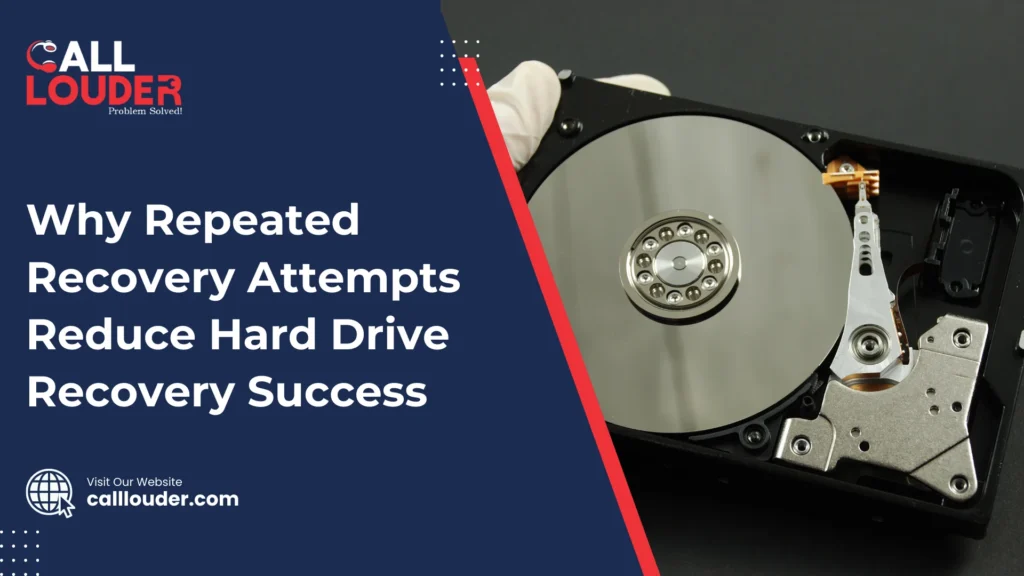
Why Repeated Recovery Attempts Reduce Hard Drive Recovery Success

A hard drive failure can feel really frustrating if you’ve lost something valuable, such as family photos, important work documents, or a school-related project. When this happens, it’s natural to panic, but most people also feel the urge to fix the problem on their own. Because of this, they often try recovery software, connect the drive to different computers, or make repeated attempts to access the files. Though these actions seem helpful at first, they can sometimes make the situation worse, thus reducing the chances of a successful recovery. Even though it makes sense to want to keep trying to recover data, the truth is that repeated recovery attempts can actually reduce your chances of a successful hard drive recovery.   Hard Drives Are Fragile Machines A hard drive is not just a storage box; it’s a complex mechanical device. Inside, there are spinning platters, read/write heads, and sensitive electronics. When a drive starts failing, these parts become delicate. Each time you power it on or try to recover files, you put extra stress on these components. Repeated attempts mean repeated stress. Even small movements or vibrations can worsen the damage. Each time you power it, you increase the risk that the read/write heads might scratch the platters, or the electronics may fail completely. If either of these things happens, files that could have been recovered may be lost forever. Data Overwriting Is a Hidden Danger Many people don’t realize that recovery tools can accidentally overwrite data. Some recovery programs create temporary files or try to reconstruct the file system. Although they are designed to help, they can sometimes write on parts of the drive where lost files are stored. Even if you are careful, running multiple recovery attempts increases the risk of overwriting. Once overwritten, your files are gone for good. Because of this, professional hard drive recovery services always try to make a clone or image of the drive first, so the original data remains untouched. Repeated DIY attempts make this cloning harder or sometimes impossible, thereby reducing recovery success. Heat and Wear Add Up Every time you power on a failing hard drive, it generates heat. Heat alone can cause damage to the delicate components inside. Each spin of the platters and movement of the read/write heads creates tiny vibrations. These vibrations would normally be negligible in a healthy drive but could adversely affect a failing drive. Repeated attempts increase wear on the drive, sometimes irreversibly. So even if the drive worked a little in the first attempt, by the third or fourth try, it may not spin up at all. Hence, repeated attempts can turn a recoverable drive into one that professionals cannot save. Why DIY Tools Aren’t Always Enough There are plenty of recovery tools available online, and many are free. Although they seem convenient, they have limits. Most consumer tools cannot handle severe physical failures or complex file system damage. Each failed attempt by a DIY tool can reduce the chance that a professional can recover your data later. Professionals have special tools, clean rooms, and techniques that can handle sensitive drives without making the problem worse. This is why stopping further attempts is so important once your first DIY try fails. The Importance of Acting Fast but Carefully It’s important to keep in mind that time is important. A hard drive that is failing can deteriorate quickly, so while repeated recovery attempts are harmful, ignoring the drive completely can also make things even worse. The best yet simple approach is to stop using the drive immediately. Don’t plug it into multiple computers, don’t run multiple recovery tools, and don’t try to copy files endlessly. Each of these actions can make recovery harder. Instead of trying to recover data from your hard drive yourself, you should reach out to a Data Recovery professional immediately. Professionals are better able to determine whether the drive has physical damage, whether data is recoverable as well as how to proceed safely. Signs You Should Stop and Seek Professional Help Here are some signs that repeated attempts could do more harm than good: If you notice any of these signs, it’s best to pause and call in an expert.  Key Takeaways Final Thoughts Recovering lost data can be very stressful at times and repeating recovery attempts often does more harm than good. If your hard drive is not functioning properly, you should immediately stop using the drive and call a data recovery professional to save your files and reduce long-term damage. The goal is not just to recover the files, but also to do so safely. Therefore, avoiding repeated attempts is one of the simplest and most important steps in hard drive recovery. FAQs

Why Repeated Recovery Attempts Reduce Hard Drive Recovery Success Read More »

computer support

How to Restart a Frozen Computer Safely

Experiencing a frozen computer can be very stressful for anyone. One moment you are working, watching a video, or browsing the internet, and suddenly everything stops completely. Your mouse will not move; the keyboard does nothing, and the screen looks frozen. Although this situation feels scary, it is very common. Most of the time, a frozen computer can be restarted safely without causing any damage. Since restarting the wrong way can sometimes lead to lost files or system problems, it is important to follow the right steps.  What Does It Mean When a Computer Freezes? When a computer freezes, it means the system stops responding to your commands. Because of this, clicking, typing, or moving the mouse does not work. Programs may stop loading, and the screen may stay the same for a long time. This usually happens when too many programs are running, a single app crashes, or the system is low on memory. Although freezing looks serious, it does not always mean your computer is broken. Stay Calm and Wait a Little The first thing to do is nothing. Yes, really. Wait for about 30 to 60 seconds. Sometimes the computer is just slow because it is trying to finish a task in the background. Since the system may still be working, waiting a short time can allow it to recover. Though it is tempting to restart right away, patience can save your work. Try Using the Keyboard If waiting does not help, try pressing a few keys. On Windows, press Ctrl + Alt + Delete. On Mac, press Command + Option + Escape. If a menu appears, your computer is not fully frozen. Because this method checks if the system is still alive, it helps you avoid a forced restart. Close the Frozen Program If you see a list of open programs, choose the one that is not responding and close it. Often, only one app causes the freeze. Since you are closing just that app, the rest of the system may start working again. Thus, you can continue without restarting the whole computer. Save Your Work Right Away If the computer starts responding again, save your work immediately. Even if things look normal, the system may freeze again. Since unsaved work can be lost at any moment, saving quickly protects your files. Try a Normal Restart If closing the app does not work, try restarting the computer normally. Click the Start menu or Apple menu and choose Restart. This allows the system to shut down safely. Because programs close properly during a normal restart, the risk of file damage is low. Although it takes a little longer, this is always the best way to restart. Use the Power Button Only If Needed If nothing works and the screen is completely frozen, you may need to force a restart. Press and hold the power button for 5 to 10 seconds until the computer turns off. Wait a few seconds, then turn it back on. Although this method works, it should be the last option. Since forced restarts stop everything suddenly, unsaved data may be lost. Remove Extra Devices Remove USB drives, printers, and external hard drives from the system after restarting. In some cases, a faulty device causes the system to freeze. Removing it helps the computer start cleanly and reduces the possibility of the system freezing again. Check for Updates Once your computer is running again, check for system and software updates. Updates fix bugs and improve performance. Because many freezes happen due to old software, keeping your system updated helps prevent future problems. Keep Your Computer Healthy You can prevent your computer from freezing in the future by keeping it organized and clean by closing all unused programs, avoiding installing too many apps. Also, restart your computer on a regular basis. These small steps make a big difference. When to Get Computer Support If freezing keeps happening, it is time to contact Computer Support. A professional can help determine whether the issue is due to hardware failure, software conflicts, or system errors. It is important to seek assistance as soon as possible, since the sooner you get help, the less money and time you’ll waste on unnecessary repairs, upgrades, etc. FAQs

How to Restart a Frozen Computer Safely Read More »

computer support

How to Fix Shadowing on a Computer Monitor Without Replacing It

If you have ever looked at your computer screen and noticed strange shadows, blurry lines, or a faint copy of text behind words, you are not alone. This problem is called shadowing, and it can make using your computer really uncomfortable. Shadowing is distracting, tiring for the eyes,  and most of the time just a nuisance! However, the good news is that although it looks serious, shadowing does not indicate that there is absolutely no chance of fixing the monitor. Many times, this problem can be fixed at home without replacing the monitor. You just need to understand what causes it and try a few simple steps. Since replacing a screen costs money, fixing it first is always the smarter move. What Does Shadowing on a Monitor Mean? Shadowing happens when images on the screen do not refresh correctly. Because of this, you may see a light shadow behind moving text, videos, or mouse movement. It almost looks like the image is lagging or leaving a trail behind it. This issue can happen on new monitors and old ones as well. Although older monitors face it more often, newer screens can also show shadowing if the settings are not right. Since the problem is often related to software, cables, or display settings, it can usually be fixed without any hardware replacement. Start With the Cables Before changing any settings, you should check the cables first. Poorly fitted or faulty cables are one of the biggest causes of screen shadowing. Unplug the monitor cable from both the computer and the monitor. Then plug it back in firmly. Make sure it is not half-connected. If you have another cable available, try switching it. Even though the cable may look fine, it could still be damaged inside. Because the screen relies on a clean signal, a weak connection can easily cause shadow effects. Check the Screen Refresh Rate The refresh rate controls how many times your screen updates every second. If the refresh rate is too low or set wrong, shadowing can appear. Go to your computer’s display settings and look for advanced display options. Choose the highest refresh rate your monitor supports. Many monitors work best at either 60Hz, 75Hz, or higher. It may seem like a simple task, changing one number, but this small change can have a tremendous impact on your experience using the Monitor. Since the screen updates faster, the shadowing often disappears right away. Adjust Monitor Settings Most monitors have their own built-in settings that you can open using buttons on the side or bottom of the screen. Look for options like response time, overdrive, or motion settings. These control how fast pixels change colors. If the response time is too slow, this could result in the appearance of shadows. Additionally, if the response time is set too high, it may cause other visual problems. You should try switching between settings like Normal, Medium, or Fast until you find the one that provides the best image. Since every monitor is different, there is no one perfect setting for all. Update Graphics Drivers Your graphics driver helps your computer talk to your monitor. If it is outdated, screen problems like shadowing can happen. Check for updates for your graphics card. This could be Intel, AMD, or NVIDIA, depending on your system. After updating, restart your computer. Because drivers control how images are displayed, keeping them updated is an important part of good Computer Support and screen performance. Lower Brightness and Contrast High brightness and contrast might look good at first, but they can make shadowing more noticeable. Try lowering the brightness slightly. Reduce contrast if it is set very high. Also, lower sharpness if that option is available. Although these changes seem basic, they help smooth the image. Since the screen is not being pushed too hard, shadows can fade away. Test the Monitor With Another Computer If you are unsure whether the problem is the monitor or the computer, try connecting the monitor to another laptop or PC. If the shadowing stays, then the monitor is likely the cause. If it disappears, the issue is probably with your computer settings or software. This simple test saves time and helps you understand where the real problem is, thereby avoiding unnecessary repairs. Reduce Electrical Interference Sometimes, shadowing is caused by nearby electronic devices. Speakers, routers, phones, or power cables can interfere with the monitor signal. Move these devices a little farther away from your screen. Also, avoid running power cables tightly alongside monitor cables. Since interference affects signal quality, cleaning up your desk setup can surprisingly improve the display. Use Screen Tests or Pixel Refresh Tools Some monitors have built-in tools to refresh pixels or clean image retention. You can also find online screen test tools that show solid colors and motion patterns. Running these tools for a few minutes can help reset stuck pixels or temporary image lag. Although this will not fix serious hardware damage, it often helps with mild shadowing issues. When to Get Computer Support If you have tried everything and the shadowing is still there, it may be time to contact professional Computer Support. This does not always mean replacing the monitor. A technician may adjust advanced settings, update firmware, or fix compatibility issues. Since early help can prevent bigger problems, getting support sooner rather than later is a smart move. Final Thoughts Shadowing on a computer monitor can be annoying, but it is usually not a permanent problem. Because many causes are simple, such as cables, settings, or drivers, you can fix it yourself most of the time. Although replacing the monitor sounds like the fastest solution, it is often unnecessary.Take your time, try each step one by one, and see what works. With patience, basic troubleshooting, and the right Computer Support, your screen can look clear, sharp, and comfortable again. FAQs

How to Fix Shadowing on a Computer Monitor Without Replacing It Read More »

how to fix slow computers

How to Fix a Slow Computer When Simple Cleanup Does Not Work

Deleting old files and clearing cache feels like the right fix most of the time, but sometimes it just doesn’t change anything and you continue to experience a lagging computer, apps taking too long to start, and even basic tasks feel tiring. This is frustrating because you already did what most people recommend. However, the underlying cause for a slow computer is most often due to deeper issues. This blog explains practical fixes that work when simple cleanup fails. Why Is My Computer Still Slow After Cleanup? Cleanup removes temporary files, but those files are rarely the main reason for serious slowdowns. Although it helps free space, it doesn’t fix system or hardware problems. Slow computer performance is often attributed to underlying issues, including limited memory, outdated software, or background programs, which aren’t resolved by running a cleanup tool.  Therefore, using those tools will not improve the performance of your computer. Your computer’s speed will remain unchanged because cleanup only clears out the clutter and does not ultimately resolve what is preventing your computer from working as it should. Check for Background Programs Slowing Down Your Computer Many programs start running as soon as your computer turns on, even if you haven’t opened them, but they still use memory and processing power. Some applications continue to run in the background while you are not using them. Because they consume CPU and RAM, everything else on your computer becomes slower. Scan for Malware and Hidden Threats Viruses, spyware, and adware often slow computers without being obvious. They run in the background, send data, or show ads. If your system freezes, shows pop-ups, or acts strangely, malware may be the cause. A full system scan matters more than a quick scan because hidden threats are harder to detect. Upgrade or Optimize System Memory (RAM) RAM helps your computer run apps and switch between tasks. When there isn’t enough RAM, everything slows down. Programs take longer to open, and your system may freeze or lag because it can’t handle multiple tasks at once. You can check RAM usage through Task Manager or system settings. If memory usage stays high even when only just a few apps are open, that is an indication that your system is being overworked and having difficulties processing everything. In that situation, the only option is to upgrade the RAM in your computer. Adding more memory gives your computer some extra space to work with and make everyday tasks smoother and much faster. Hard Drive Issues That Cause Slow Computers The type of hard drive affects speed a lot. Traditional HDDs are slower, while SSDs load files and apps much faster. If your system still uses an HDD, slow performance is common. Over time, data on HDDs gets scattered, causing fragmentation. This results in longer read and write times. As a consequence, files open slowly and apps take more time to respond than normal. The most common signs of a failing hard drive include frequent freezes, long boot times, strange noises, and missing files. Once any of these issues arise, backing up data and replacing the drive is recommended. Fix Software Conflicts and Outdated Applications Sometimes programs don’t work well together. Although each app may run fine on its own, running them together can cause freezing, crashes, or slow response. Outdated software also creates problems because it may not match your system anymore. This leads to errors and performance drops since the software can’t communicate properly. Keeping applications updated is important. Updates fix bugs, improve speed, and help programs work smoothly with your system. Operating System Problems Affecting Performance Corrupted system files can make your computer unstable and slow. These files often get damaged after sudden shutdowns or incomplete updates. Pending or failed updates also cause issues, since the system keeps trying to fix itself in the background, which uses resources and slows everything down. As a result of this, boot times increase and apps lag. Fixing system errors and completing updates helps restore performance. Overheating and Hardware Performance Throttling Dust buildup blocks airflow and traps heat inside your computer. Also, older computers with poor ventilation make the problem worse. Additionally, when a CPU overheats, the system slows itself down to prevent damage. This causes a very noticeable drop in speed even with the simplest tasks. You can spot overheating by loud fans, hot surfaces, or sudden lag. Cleaning vents and improving airflow helps keep performance steady. Advanced Slow Computer Fix Methods System diagnostic tools help find hidden problems. They show which parts of the system are overloaded or failing. Updating drivers improves how hardware works with the system. An old driver usually lead to errors and slow performance. If problems continue, you may need to reset or reinstall the operating system. This removes any underlying software issues and gives a fresh start. When to Seek Professional Help for a Slow Computer If basic fixes don’t help fix the issue, it is best to have a professional check it out. Frequent crashes or error messages are clear warning signs and ignoring performance issues can lead to data loss or hardware damage. And if these small problems are left unaddressed, it may result in a loss of data or possibly damage your hardware. Professional Computer Support services save time and reduce risk. Experts can quickly find and fix issues safely. How to Prevent Your Computer from Slowing Down Again Regular maintenance keeps systems healthy and performing small maintenance tasks like updates and scans prevent long-term problems, and help prevent future maintenance issues. Install only trusted software and remove apps you no longer use. Fewer programs mean fewer conflicts and better speed. Keep an eye on system performance. Catching issues early helps maintain smooth and reliable operation. FAQs

How to Fix a Slow Computer When Simple Cleanup Does Not Work Read More »

1000+

Happy Clients

4.9+

Average Rating

12Hr

Support

100%

Success Rate

Fill the Form & Unlock Your Benefits!

Buttons Popup

Fill the Form & Unlock Your Benefits!

Buttons Popup